
All-In-One Recruitment CRM
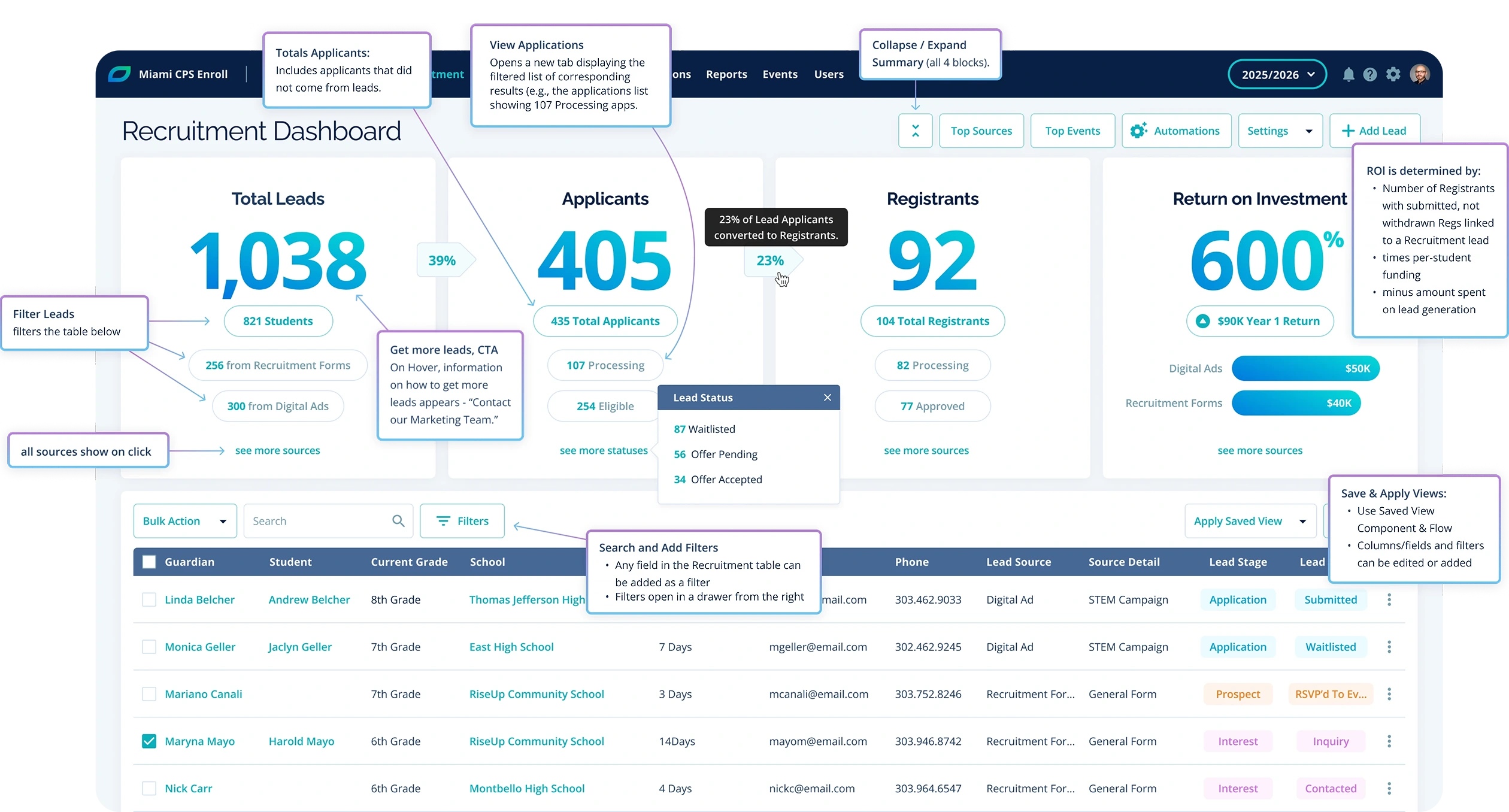
Recruitment is a new CRM module built directly inside SchoolMint's enrollment product, designed to bring lead tracking, attribution, enrollment, and analytics into the same place. Recruitment creates a single unified experience, from the first parent inquiry all the way to an enrolled student.
The Problem
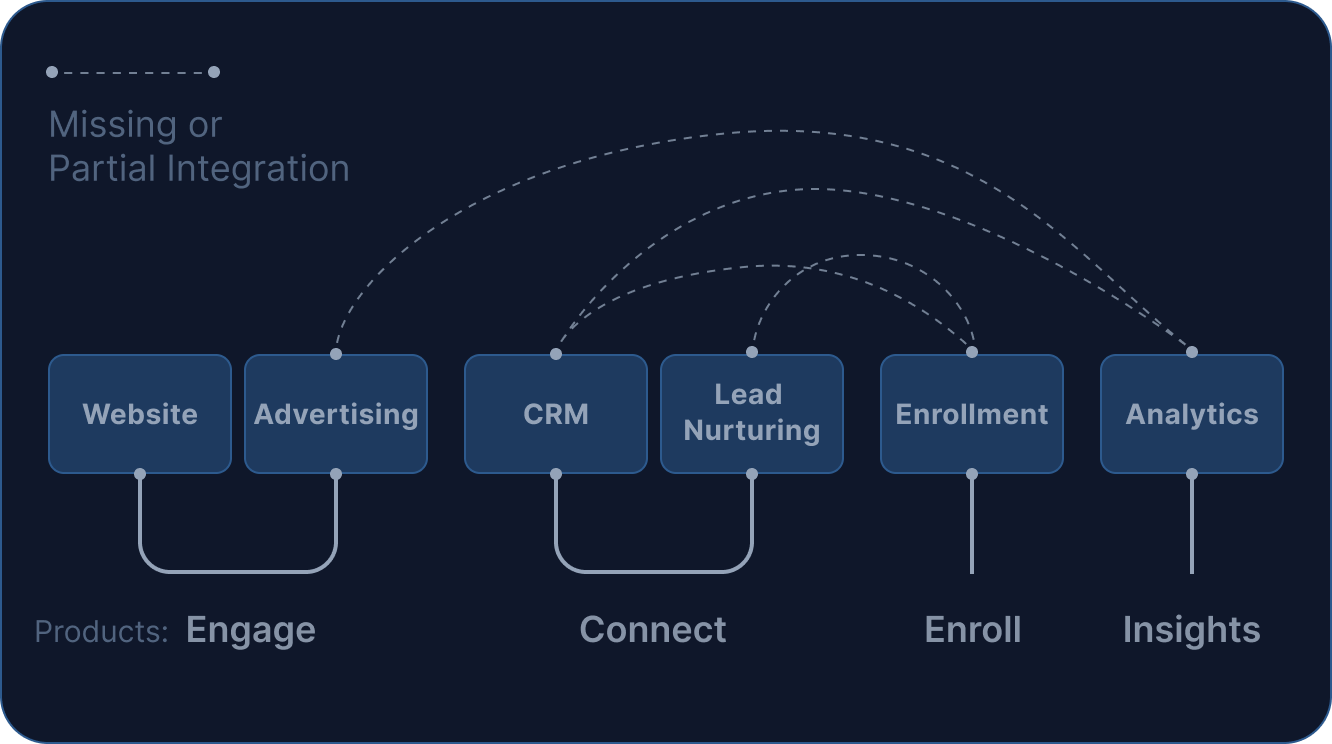
SchoolMint had built or acquired a broad suite of products covering every stage of the enrollment funnel, from digital advertising and lead nurturing to enrollment and analytics. But despite this breadth, the products were siloed, and schools were struggling to connect the dots.
Low usage, high churn, and declining revenue all traced back to the same structural problem: A disconnected funnel.
Objectives
The Recruitment initiative was anchored around these strategic pillars that aligned product thinking with business goals:
- Design a CRM that seamlessly integrates with our existing product ecosystem, tailored to our clients' needs and creating a unified experience.
- Build all features needed to migrate all legacy CRM clients to Recruitment.
- Build on functionality we already have in our enrollment product to add features that users and potential users have been asking for.
- Grow revenue by boosting competitive advantage and expanding our Ideal Customer Profile (ICP) through added functionality that makes our unified solution viable for enterprise organizations.
My Role
As the Senior Product Designer, I led the design and user experience from early strategy through release, working closely with the VP of Product, engineering, and key customer-facing stakeholders.
During this project, I introduced AI vibe code prototyping and ideation into SchoolMint's design process, which made exploration and feedback much faster.
Recruitment v1.0 and the integrated funnel launched in mid-2025, and we have continued to ship improvements through February 2026.
Before any design work began, the team invested significant time in understanding both the business context and users needs. This phase was critical because Recruitment was not a simple feature addition, it was a strategic repositioning of how SchoolMint delivered value to schools.
A Deep Look as Usage and Retention Data
The story data told was consistent, the products were too manual, too fragmented, and too hard to derive value from quickly. That gap between top-of-funnel activity and bottom-of-funnel outcomes wasn't just an inconvenience, it was the primary driver of churn.
- Low Usage: 40% of Connect (CRM) have not been active in at least 30 days. The product requires too much manual work for a job they’re not already doing.
- High Churn: 50% of Engage clients didn't renew after year one, as it is not integrated with the rest of the enrollment pipeline.
- Declining Ads Revenue: Down 14% YoY as schools have no clear ROI visibility from ad spend.
User Research
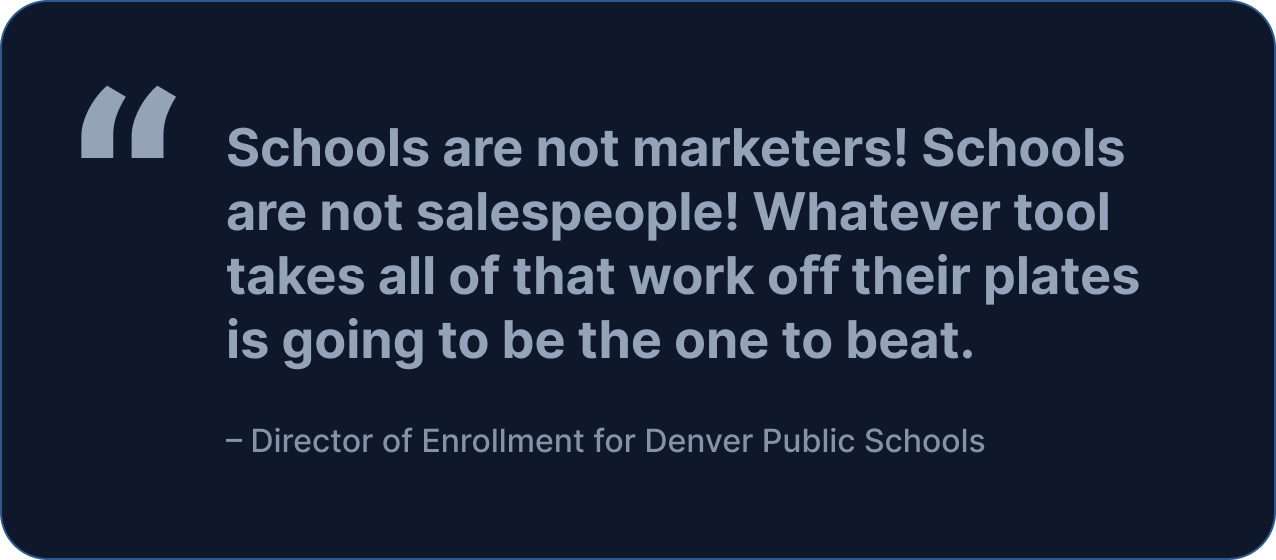
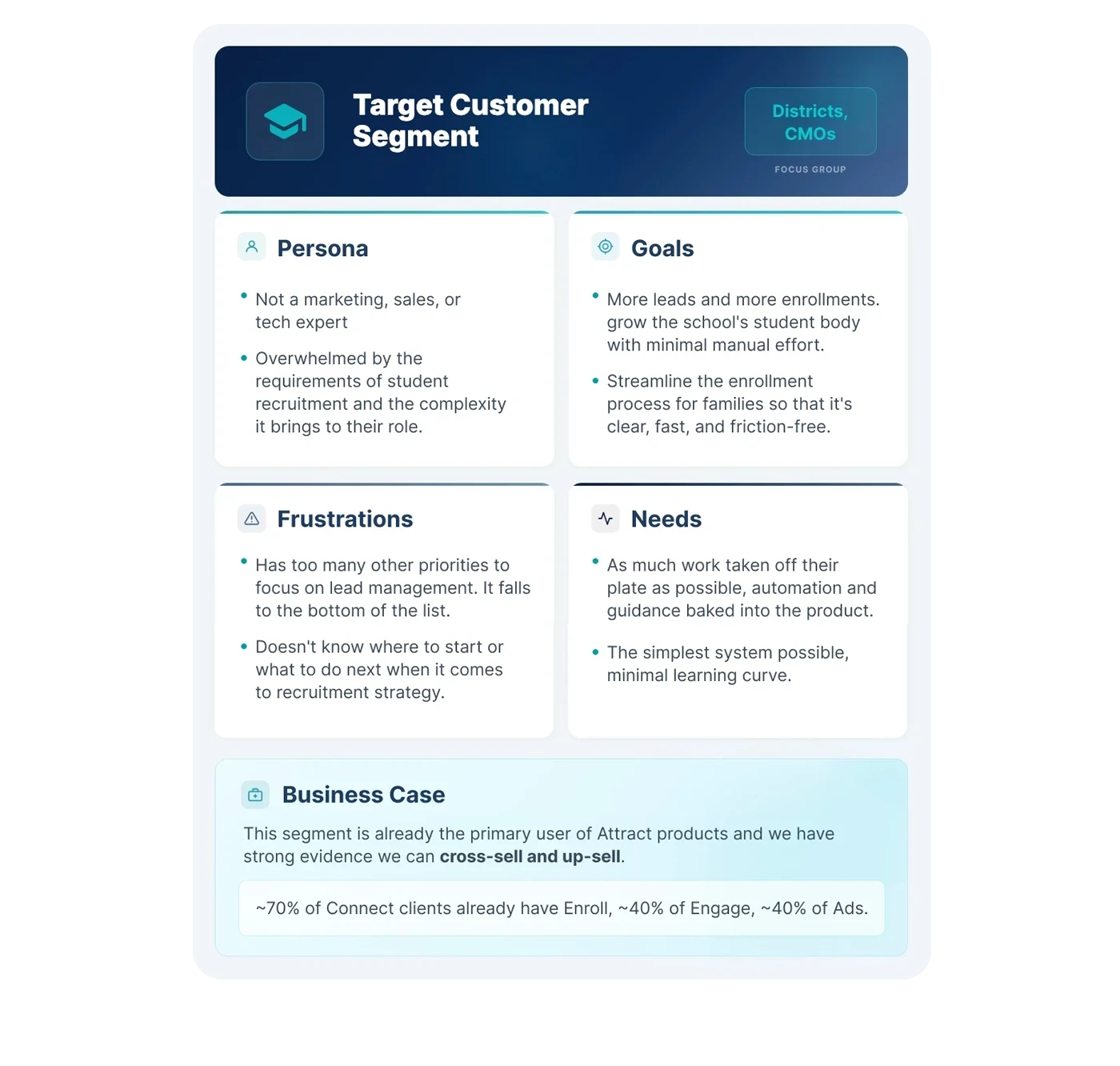
Qualitative research, including interviews with current customers, win/loss analysis, and customer support ticket review, painted a consistent picture of our primary target customer and user persona. School administrators and enrollment coordinators are not marketing professionals. They are generalists managing a wide range of operational responsibilities, and recruitment is one item on a long list.
Where Are We Against the Competition?
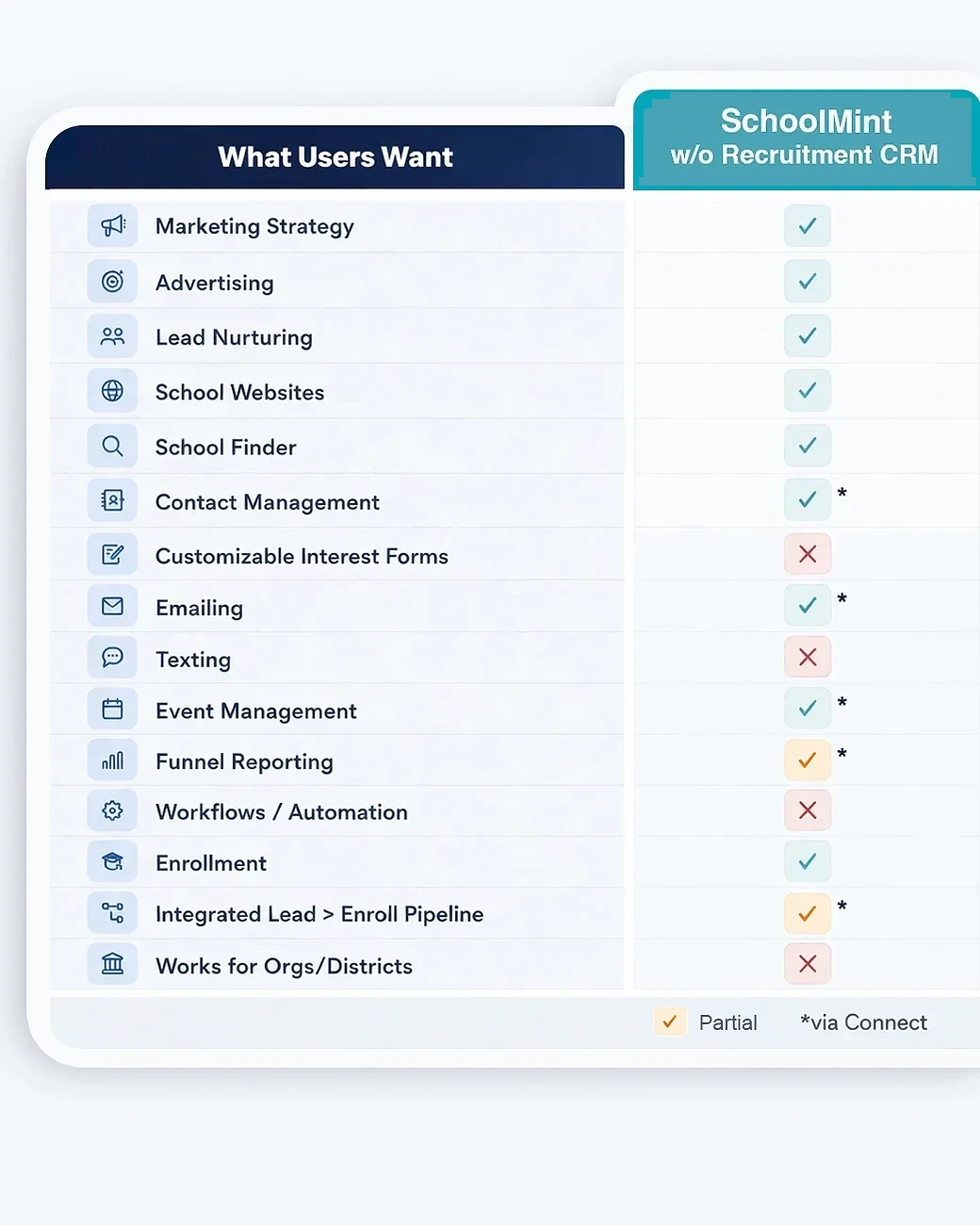
We mapped SchoolMint against its two primary competitors in the SEM space. The analysis revealed that SchoolMint was missing several features that users expected, most notably texting capability, funnel reporting, workflow automation, and the ability to serve enterprise/district clients.
With research grounding in place, the team and I developed a design strategy structured around two interdependent principles: reduce work and add value. Every decision in the product, from architecture to the design of the dashboard, was evaluated against these principles.
Reduce Work & Add Value
The most structurally significant design decision was building Recruitment as a module inside SchoolMint Enroll. This integration approach was deliberate and it meant that:
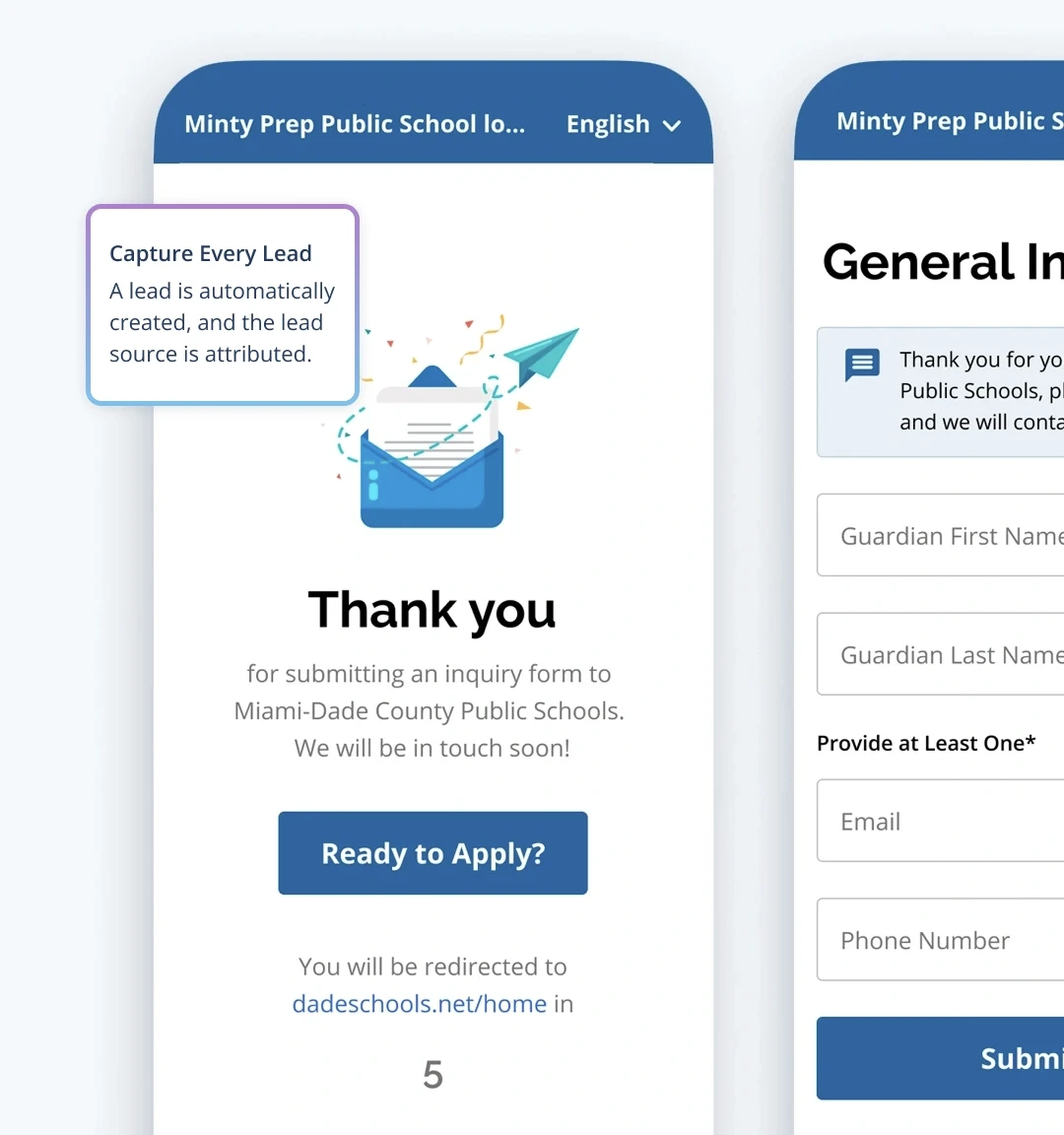
- Seamless data flow: Leads from any source (ads, forms, events) flow directly into the same system where schools manage applications, lotteries, and registrations, eliminating the data gap entirely.
- Fewer things, better: Recruitment becomes a natural extension of a product users already know, dramatically lowering the adoption barrier. Schools get one login, one permission structure, and one interface to manage both marketing and enrollment, and CX has fewer products to learn and support.
- Native ROI attribution: With a shared data model, the system can calculate exactly how many applications were generated from each lead source.
- Full-journey visibility: Recruitment + Enroll could do something no competitor could: show the full journey from ad click to enrolled student in one place.
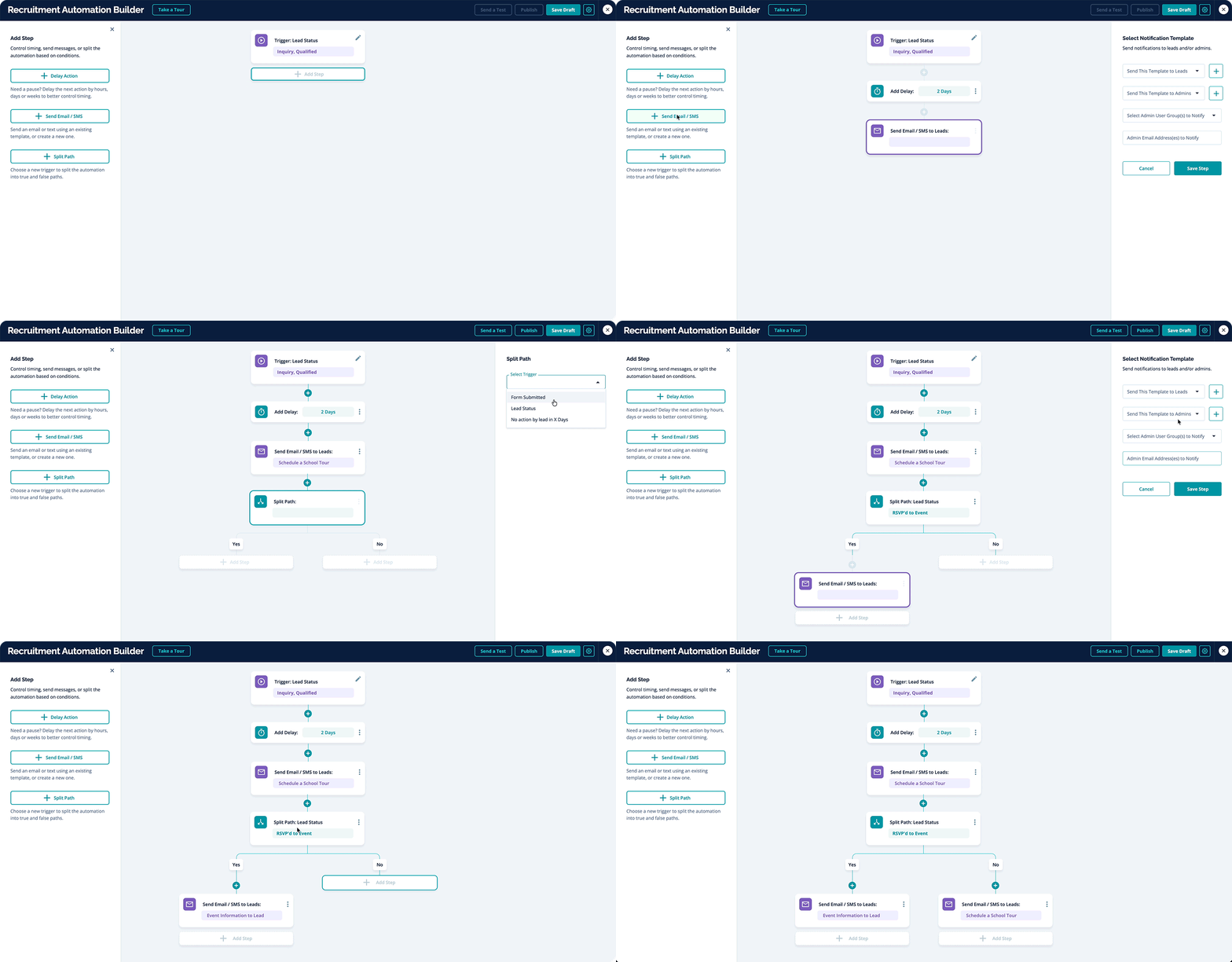
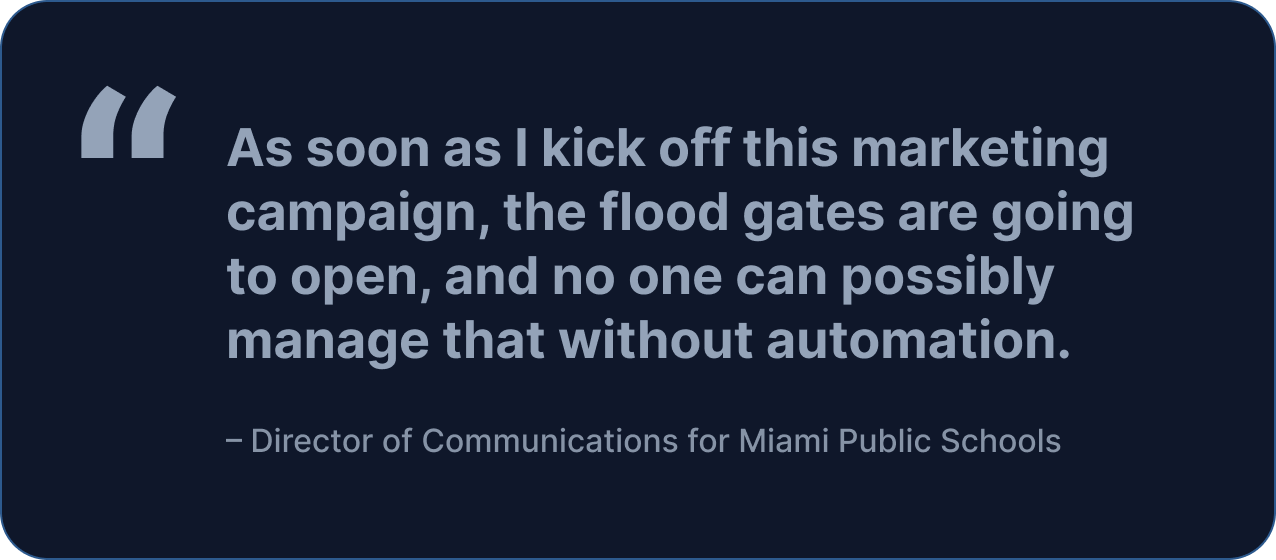
- Workflow automation: Strategically nurture families and save time with automated emails and SMS.
How Do We Get There?
Using data and user needs as our guide, we built a prioritized roadmap in close collaboration with Engineering, weighing level of effort and technical constraints. We then aligned with leadership to address time constraints, risks, and key trade-offs before moving forward.
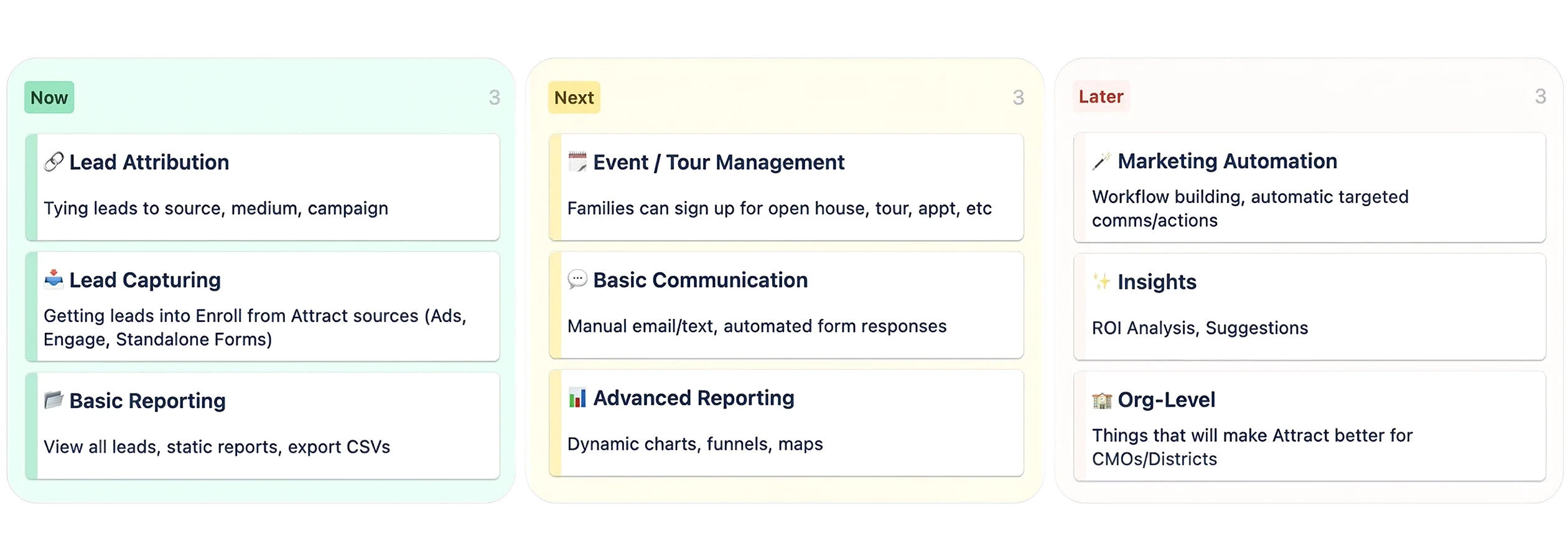
Where does this put us against the competition?
These additions transformed our product from a basic recruitment tool into a full-funnel solution that directly competes with, and in many areas surpasses, standalone CRM platforms.
Tour management, customizable interest forms, integrated communications with automated responses, and advanced reporting with saved views, funnels, and engagement stats gave schools everything they needed in one place.
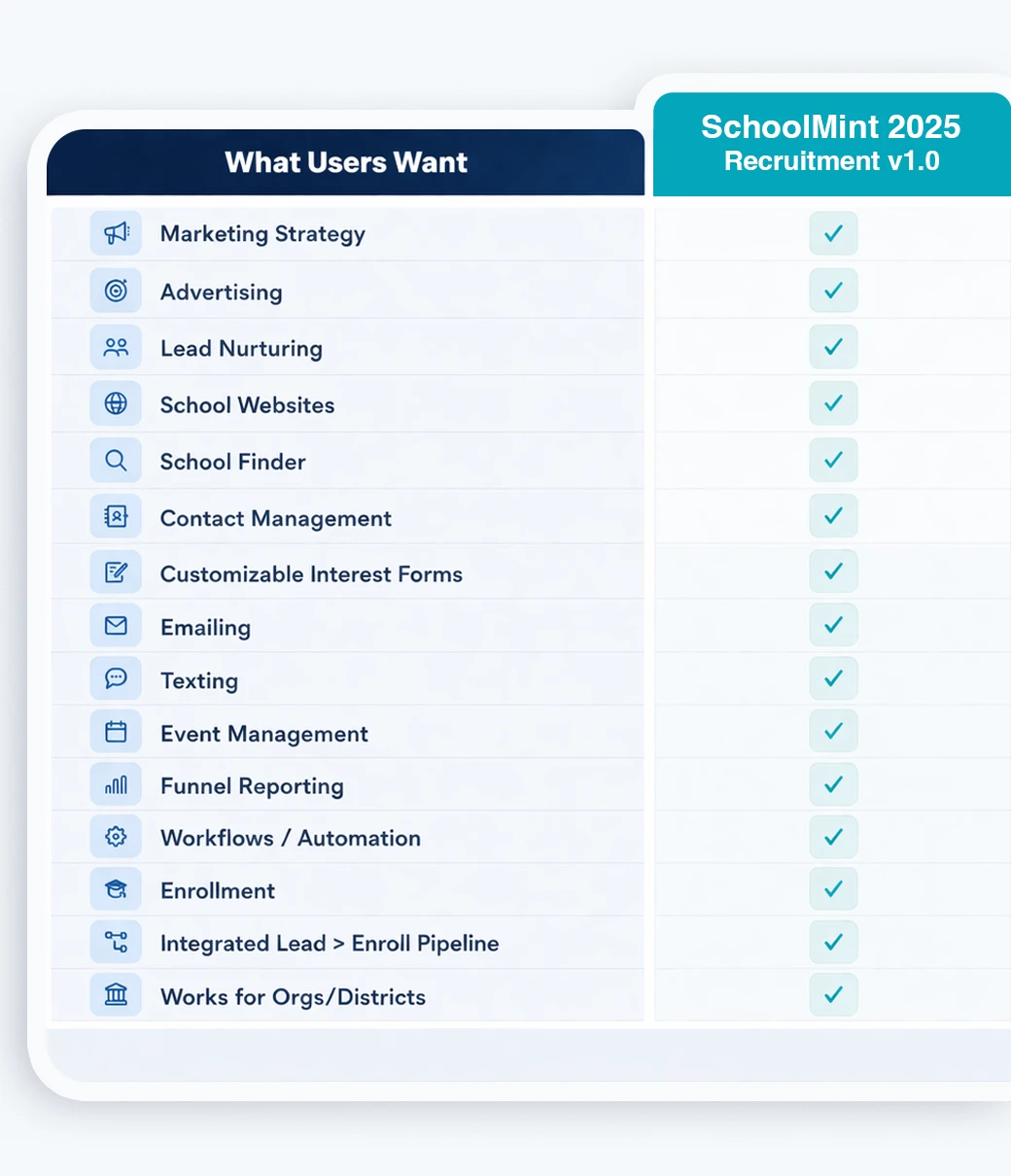
03 Design: From Concept to Interface
With strategy defined and research in hand, the design process moved through progressive levels of fidelity. The goal at each stage was to validate decisions as early as possible.
User Flows
The main challenge was adding a new module to an already mature product without making it feel more complex. I mapped the core flows, including permissions, lead management, data filtering, and workflow automation. Each flow was designed to be linear and low-friction, with minimal branching to keep the experience manageable.
AI Ideation & Wireframes:
Early ideation focused on clarifying layout, hierarchy of actionable lead data, and usability. Key decisions included prioritizing three KPIs (Unique Leads, Enrollment Target, and ROI), clear CTAs, and surfacing actionable lead data in the table.
Exploration & Early Concepts.
Research showed that schools know their lead to enrollment ratios. Early versions of the recruitment dashboard included percentages to goal, prominent CTAs, and warning messages when not enough leads were being recorded.
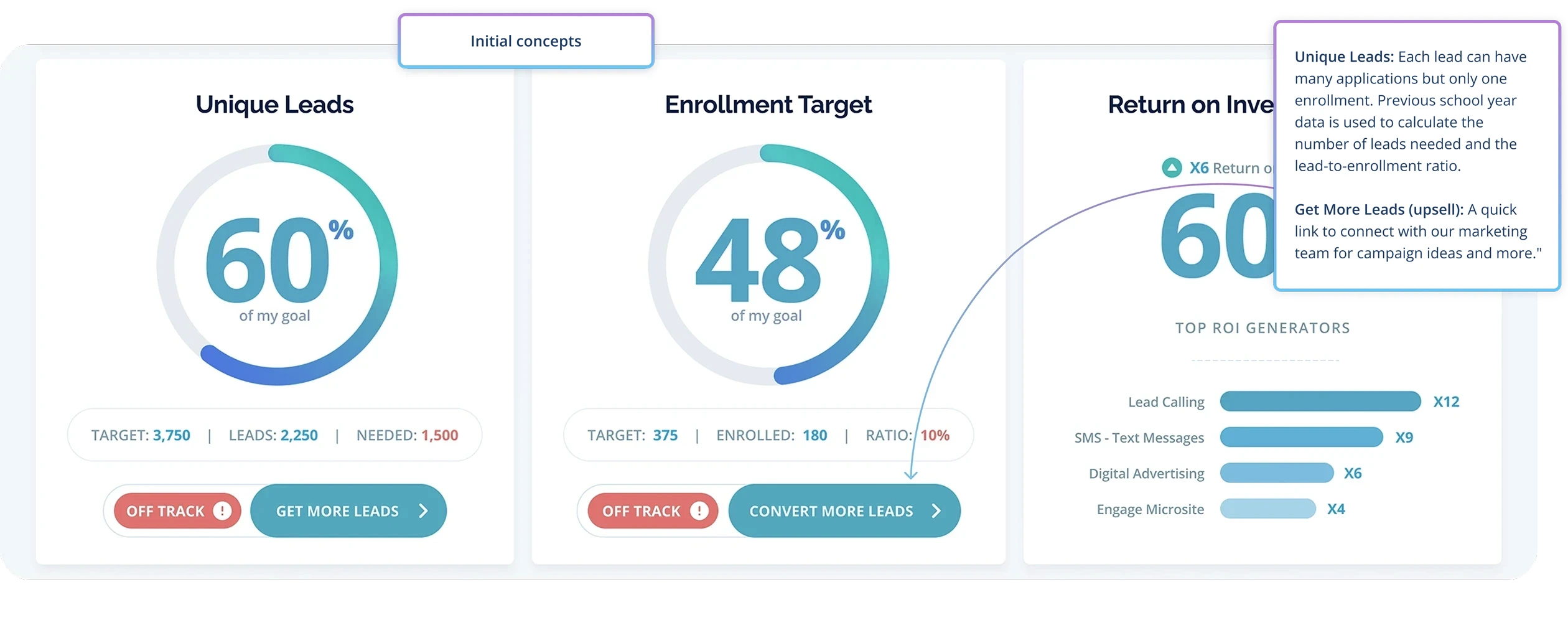
High-Fidelity AI Prototypes
Interactive prototypes were created for alignment and usability testing. I used Figma Make to vibe code the workflow automation builder and the main dashboard functionality. These prototypes also proved essential for business goals. The sales team was able to use them in conversations with enterprise clients to build excitement and support sales efforts.
Refinement & Final Direction
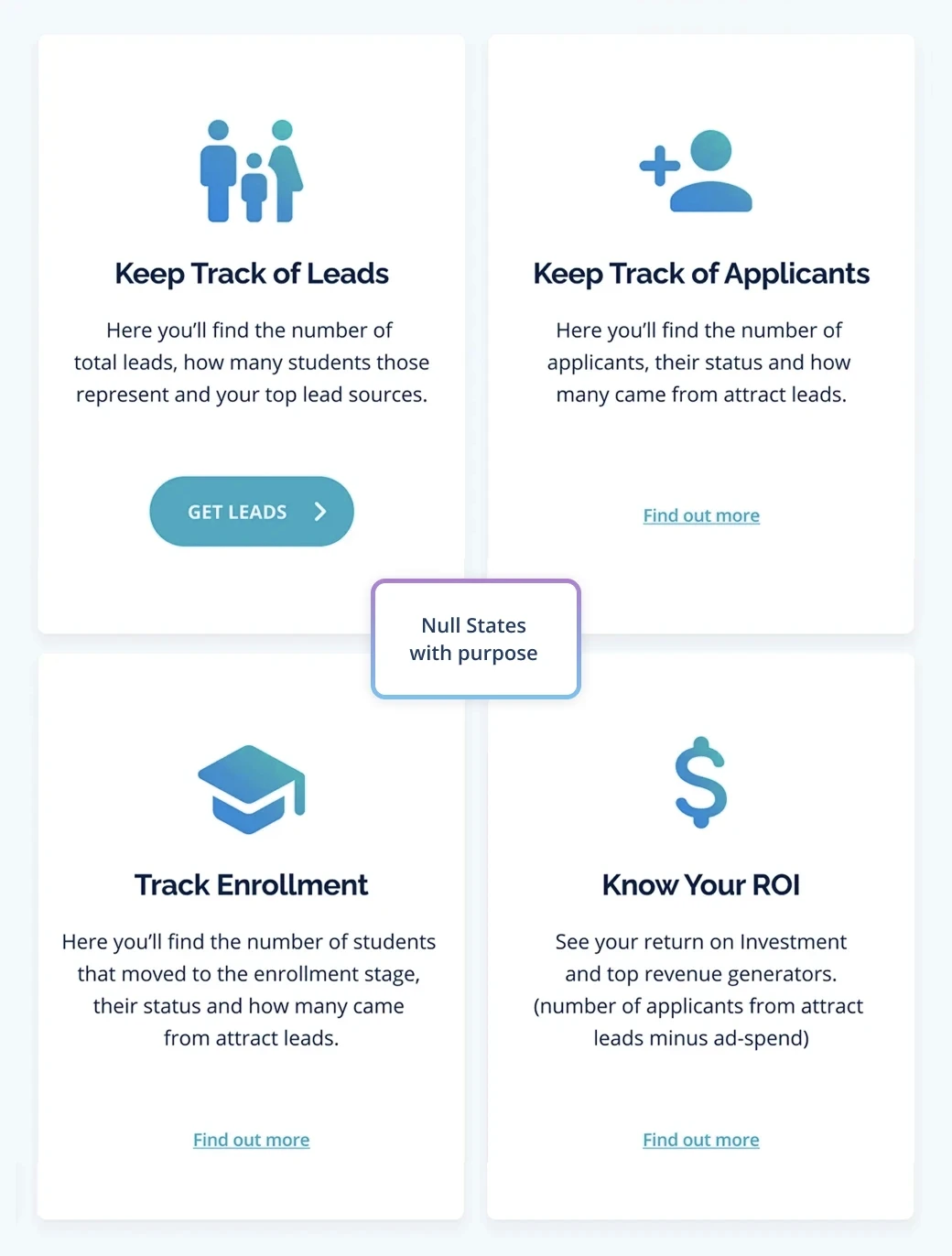
Feedback revealed that users wanted more detail in the funnel view and actual numbers over percentages. Resolving these and other misalignments led to updates that now include Total Unique Leads, Applicants, Registrants, ROI, top performers, and enrollment status.
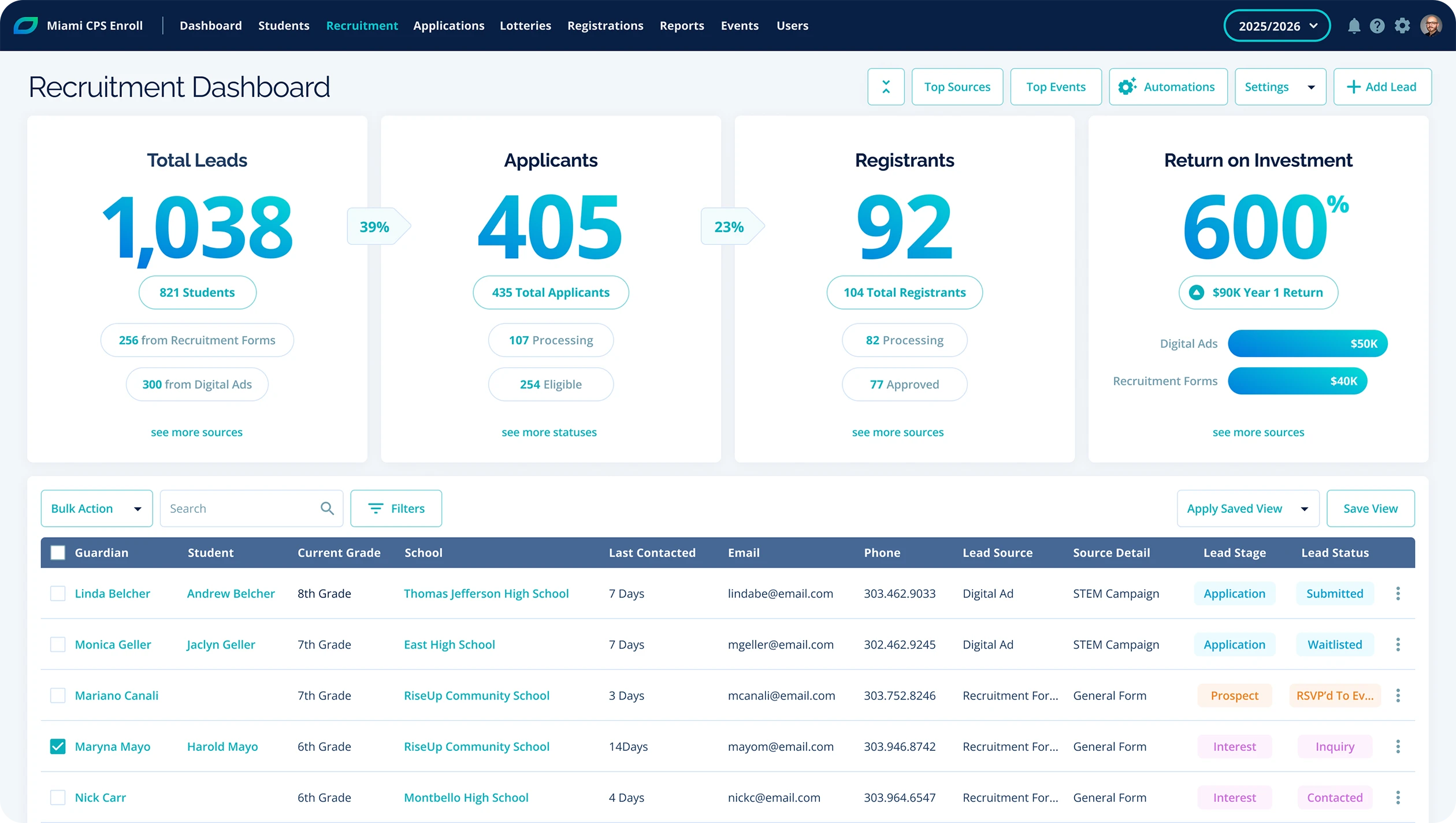
Testing was embedded throughout the design process rather than treated as a final gate before release.
Design Reviews
Early wireframes and mockups were reviewed in weekly design critiques with the cross-functional team. These surface edge cases and technical constraints, such as handling leads from multiple sources or how to approach editing a live automation.
Usability Testing
Moderated sessions were conducted with enrollment professionals at single charter and enterprise school districts. We focused on several tasks, including: taking action on a lead, finding lead source, and automations.
Across all cycles, I applied three principles: address confusion before adding capability, make the UI as simple as possible, and never ask users for data the system already knows.
Results
Recruitment was released in mid-2025. Early feedback suggests the unified interface significantly reduced time-to-first-value. Features like lead attribution and ROI reporting give us a clear advantage over competitors.
What We're Watching
As the product matures, key metrics include weekly active users, renewal rates, ads retention, and time to first value for schools. Full impact will be measured over the upcoming enrollment season.
Recruitment was one of the most strategically complex and coordinated projects I worked on at SchoolMint, bringing fragmented products into one coherent experience while meeting key business goals.
It also gave me the opportunity to introduce vibe coding into our design process, a step that proved essential in meeting deadlines and moving the team forward. Close collaboration across product, engineering, architecture, and leadership was what made this project successful.
About AI & Product Development
It is important to stay curious and see how it can improve processes. It is already improving different aspects of design and engineering. As it becomes ‘easier’ to create products, judgment matters as much as ever.
What Would I Do Differently?
Overall, this project was handled effectively. If I had to point to one thing, it would be releasing the automation builder earlier as part of v1.1. Without it, the product lacked a clear competitive advantage, so bundling it sooner would have been more impactful. But, unlocking multi-site support for enterprise organizations and districts was a higher priority at that stage.
